
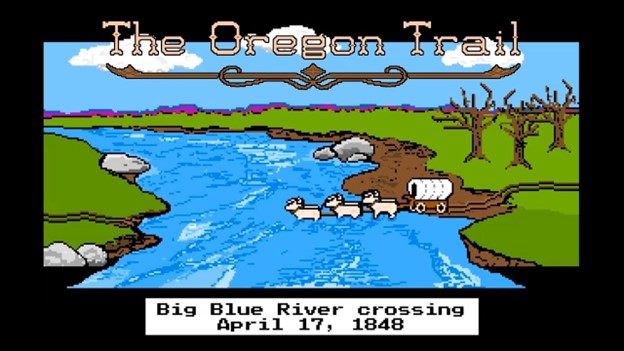

If you ever played Oregon Trail as a kid, you learned an early lesson: movement brings opportunity — and potential peril. In the game, travelers braved rivers, broken axles, venomous snakes, and—famously—dysentery, in search of a better life. Today’s moves usually do not involve such high stakes, but they can involve unanticipated complications.
At the end of the COVID pandemic, professionals, retirees, and families sought out new homes for a variety of reasons—space, lifestyle, improved cost of living, or a change in political (or actual) climate.
While estate planning was not a major impetus of these relocations, a change in domicile from one state to another can have real implications for an estate plan. Wagons were excellent for traveling across the open prairie but became hindrances as westward travelers struggled over narrow, rocky mountain passes. An estate plan perfectly tailored to one jurisdiction might no longer fit the new environment. Differences in tax regimes, property laws, or fiduciary rules mean that, without careful review, families risk finding that their once-reliable plans are now poorly suited to the terrain.
Signposts for Review
Major life events are natural signposts for revisiting an estate plan — things like marriage, divorce, the birth of a child or grandchild, the death of a beneficiary or fiduciary, or a significant change in assets. One that deserves just as much attention is a move to a new state. Each state has its own laws governing wills, trusts, powers of attorney, and property rights, which can introduce subtle but important differences in how an estate plan functions. The good news is that a move does not invalidate existing documents, but it’s wise to review and, if necessary, update your plan to ensure it remains suitable to the new environment.
Differences in Terrain
Estate planning is largely a creature of state law. Differences from state to state can affect how documents are interpreted, enforced, or even recognized. The Full Faith and Credit Clause of the U.S. Constitution generally ensures that a will, trust, power of attorney, or health care directive validly executed in one state must be honored in another, practical issues often arise. Differences in state-specific rules can cause delays, confusion, or even litigation — and these can crop up at the most difficult times for your family.
Here are some examples of how state law differences can affect your estate plan:
Trusts
One difference where there is wide variance among the states is in how long a trust can last. In some states, trusts are still subject to the complicated old English Rule Against Perpetuities, limiting how long a trust can last. Other states have set the rule at different lengths (many states have 90 year rules; others have set much longer time periods – from 300-1,000 years). In a few states, (for example, South Dakota) the Rule has been abolished, allowing “dynasty trusts” that can last forever. Depending on the terms of the trust, if a trust moves between states with rules of different lengths, complicated federal and state tax issues may arise.
Many states now allow for directed trusts — trusts where the trustee can be instructed by a separate “investment advisor” or “distribution advisor” for example— but the rules vary widely about the manner and extent to which fiduciary responsibilities can be divided.
Another area where state laws vary significantly is in the tax treatment of trusts. Different states have different rules about whether a trust is subject to state income tax, how that income is taxed, and the criteria for determining which state has taxing authority over the trust. For instance, California is known for imposing high state income tax on trusts, and it taxes any trust that is administered in the state or has a California resident as a beneficiary. Someone moving from a high-tax state like California to a no-tax state like Tennessee or South Dakota might want to take steps to move the trust or adjust its administration to be sure their trust’s administration doesn’t trigger California tax. Failure to do so could lead to continued taxation by the old state if the trust remains tied to it.
One other important note to remember – if you’re purchasing real estate in a new location, be sure that it’s titled in the trust’s name in order to avoid probate and maximize the other benefits of your trust.
Wills
Nearly every state requires some form of formality when executing a will, but the rules differ. Most states require two witnesses, but some require both witnesses and notarization. Some states recognize holographic wills (handwritten and signed without witnesses), while many states do not. Digital wills (electronically signed and stored wills) are beginning to gain acceptance in some states, like Nevada and Arizona, but remain unrecognized in the majority of the country.
As long as the will was validly executed in the state where it was made, it should be accepted by the court in another state (even if it wouldn’t have been valid in that state). However, probating a will that doesn’t meet a state’s expectations of formalities could be cause for challenges or delay.
Powers of Attorney
Powers of attorney (sometimes called POAs) are documents that allow someone to manage your affairs if you’re incapacitated. Health Care Advance Directives (including Health Care Powers of Attorney or Proxies and Living Wills) allow you to make certain health care decisions in advance, and/or name someone to make health-related decisions for you if you’re incapacitated. There can be significant differences among the states as to how these are treated. Some states require both notarization and two witnesses to validate a POA, while others require only notarization or only witnesses, or have even more relaxed standards.
States also impose different rules on who can serve as your agent. For example, some prohibit employees of your health care provider from serving unless they are close relatives.
Even if your out-of-state POA is technically valid, institutions like banks, title companies, or healthcare providers might hesitate to honor it if it looks unfamiliar or lacks language they expect under local law. This can lead to delay and frustration, especially if time-sensitive action from an agent is needed.
Smoothing Bumps in the Road
Though a will or trust that’s valid where it was signed should still be honored, mismatches in local form or procedure can cause delays, confusion, or resistance. Just as travelers on the Oregon Trail had to adjust for new terrain — swapping out supplies, repairing wagons, and yes, avoiding unexpected dangers — your estate plan may need to be re-tuned as your geography changes. Hopefully dysentery isn’t a problem in your future, but planning now to avoid potential roadblocks may end up keeping your wagon train out of danger and helping you avoid unnecessary detours to securing your legacy.